Independent moisture decision support
Don’t buy a bigger box.
Find the moisture load.
A field-style diagnostic for crawl spaces, basements and post-leak drying. Measure first. Fix the source. Size the machine last.
No panic selling. The lab can recommend monitoring, repairs, professional help—or equipment.
THE TRIAGE INSTRUMENT
Turn symptoms into a next move.
This planning tool does not inspect your building. It organizes the conditions that change the answer.
WHY THIS ORDER MATTERS
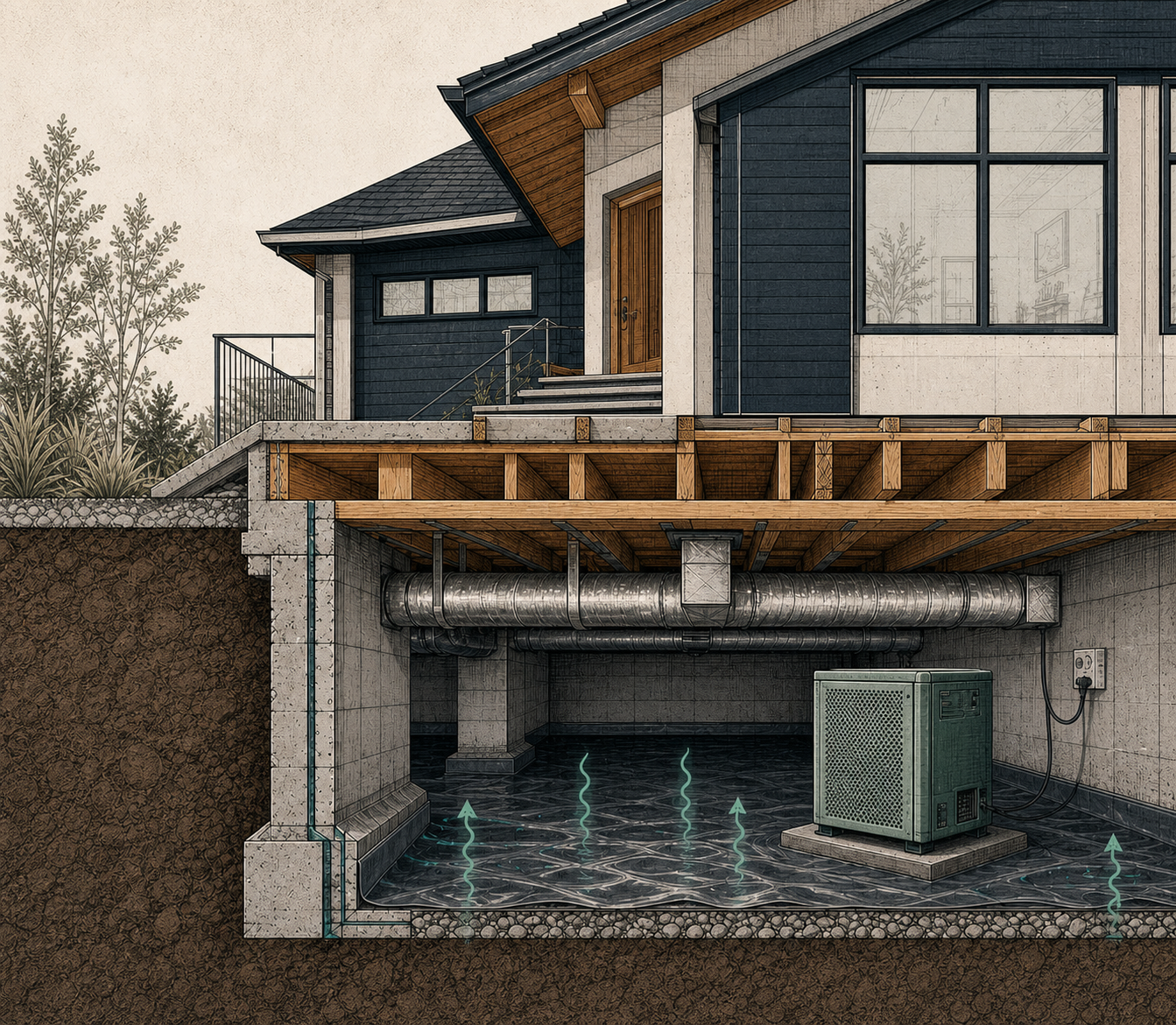
A dehumidifier removes vapor.
It does not repair water.
- SourceStop leaks, runoff and standing water.
- BoundaryUnderstand vents, ground vapor and air leakage.
- LoadMeasure RH, area, temperature and severity.
- MachineThen compare AHAM capacity, drainage and serviceability.
FIELD NOTES / 01–04
Make the expensive decision once.
Plain-language guides to the specifications and building conditions that actually change the purchase.
How to size a crawl-space dehumidifier
Use area, temperature, sealing and moisture load—not the largest number printed on the box.
Read field note →02SpecificationsAHAM pints vs. saturation pints
Two ratings can describe the same machine. Only one reflects normal operating conditions.
Read field note →03InstallationPump or gravity drain?
Choose the drainage route before the unit, or inherit a very expensive bucket.
Read field note →04DiagnosisDehumidifier vs. encapsulation
A machine controls vapor. It does not stop ground moisture or repair a water source.
Read field note →STOP CONDITIONS
Sometimes the responsible recommendation is not a product.
Active water, sewage, widespread visible growth, damaged electrical systems or soft structural materials need a different first move.
REFERENCE BENCH
Targets summarize public EPA and ENERGY STAR guidance. Site recommendations remain independent.